Scenario planning facilitator to stress-test the plan before the year starts
A facilitated scenario planning session. You leave with three or four plausible futures, a plan tested against each, and the early signs that tell you which one is unfolding.
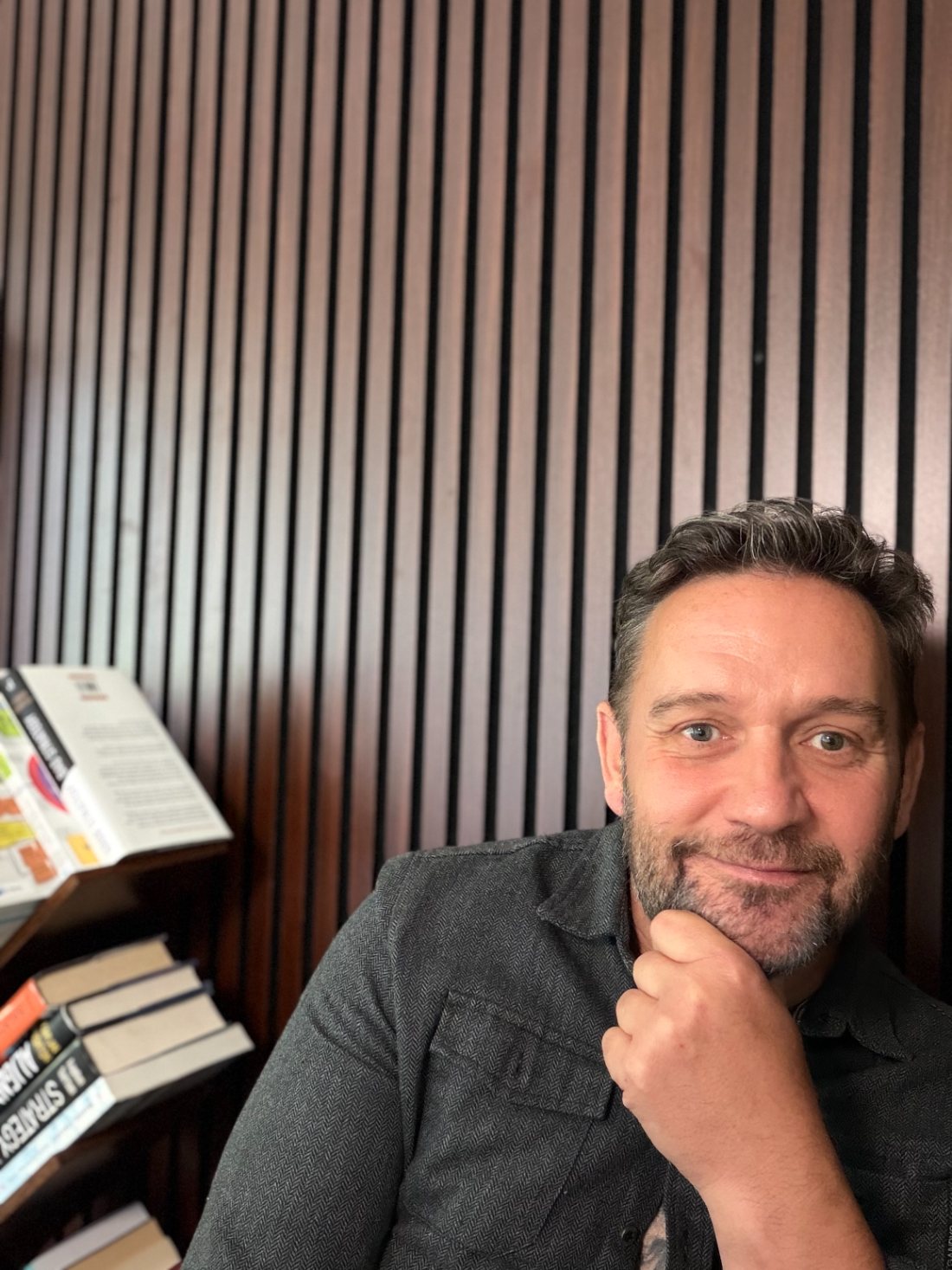 Matt RobertsCo-founder of ZOKRI
 Peter KerrExpert adviser and facilitator
Meet Matt before you book
The person you'd be talking to, and how we think.
You're probably here because
Sound familiar?
- Our plan only works if everything goes right.
- The board keeps asking what happens if our biggest customer leaves.
- We change direction every time the news changes.
- I don't want to have the hardest conversation in the middle of a crisis.
Not another budget case
Financial scenarios and strategic scenarios are different things.
What most companies have
Financial scenarios
- One strategy, several sets of numbers.
- Base, downside and upside cases for revenue, costs and cash.
- Owned by finance, built for the budget.
What this session builds
Strategic scenarios
- Several plausible futures, and what each means for the strategy.
- Tests where you play and how you win, not just the numbers.
- Then we shape the company to make the best future more likely.
Your finance team already has scenarios. They're for the budget, not the strategy.
Then we make the best future more likely
- Strategy
- Alignment
- Structure
- Clear roles
- Faster decisions
- Shorter learning cycles
- Faster outputs that drive outcomes
Who runs it
The people in your room.
"Your planning day is the most expensive meeting you'll hold all year. The expensive bit isn't the venue. It's everyone working hard, for twelve months, on the plan you agreed. If it's the wrong plan, or simply a weaker one, you've bet the year on it. That's why most of our effort goes in before anyone sits down."
Proof
Run by people who do this every week.
When we're the wrong choice. If what you need is a financial model built from scratch, hire an FP&A contractor first and bring us in once it exists.
After the plan
The plan is agreed. Now someone has to find the time.
10 of 15recent discovery interviews
Leadership teams know what needs fixing.
- They can name the broken process and the meeting that goes nowhere.
- What they can't find is the time to fix it.
- Some aren't sure they have the skills.
- In 10 of our last 15 interviews, someone said it almost word for word.
- Output under pressure
- Work harder
- No time to improve
- Capability erodes
- More fires
MIT's John Sterman and Nelson Repenning call it the capability trap.
- Under pressure, the sensible short-term move is to work harder.
- That leaves no time to improve the way work gets done.
- Capability erodes, the fires multiply, and firefighting starts to feel like diligence.
Source: Repenning and Sterman, California Management Review, 2001
It's hard to see from the inside.
- Managers see their own patch, but most plans fail at the handoffs between teams.
- In a study of nearly 8,000 managers, 84% could rely on their boss and their own team. Only 9% could always rely on colleagues in other functions.
- Naming the problem is political, because it usually points at a peer or a past decision.
- Most managers were promoted for doing the work, not for designing how it flows.
Source: Sull, Homkes and Sull, Harvard Business Review, 2015
- We run it with youYou run it, we coachQuarterly review
So we stay, then step back.
- At first we run the work alongside your people: mapping the process, testing a fix, measuring it and running the retrospective.
- Then your managers run the next cycle while we coach from the side.
- Then we step back to the quarterly review.
- Your people learn by doing the work with us, which sticks in a way a training day never does.
- We'd rather you stopped needing us by spring.
- People
- Operations
- Sales and marketing
- AI enablement
Fractional, until the role is hired or grown
Sometimes the gap is a missing person, not a missing skill.
- The plan needs someone to lead the people side, run operations, drive sales and marketing, or get AI working in the business.
- Hiring for that takes six months you don't have.
- One of us joins your team part-time, works from inside with your people and systems, and hands the role over when you've hired or grown someone into it.
Weekly check-in
Goal 2Your owner + oursProgressConfidence3 of 5We're your accountability partners.
- People find it harder to let a goal slide when someone outside the business turns up every week expecting to see it moved.
- A quarterly cadence, with a named owner on your side and one on ours for every goal.
- Weekly check-ins on progress and confidence, so a slipping goal shows up in week three rather than week twelve.
- What we learn, including what didn't work, is written down and shared across the team.
- We're measured on one thing, and it's results.
- Planning30 daysCarry on
Every engagement ends with a 30-day review and an option to carry on.
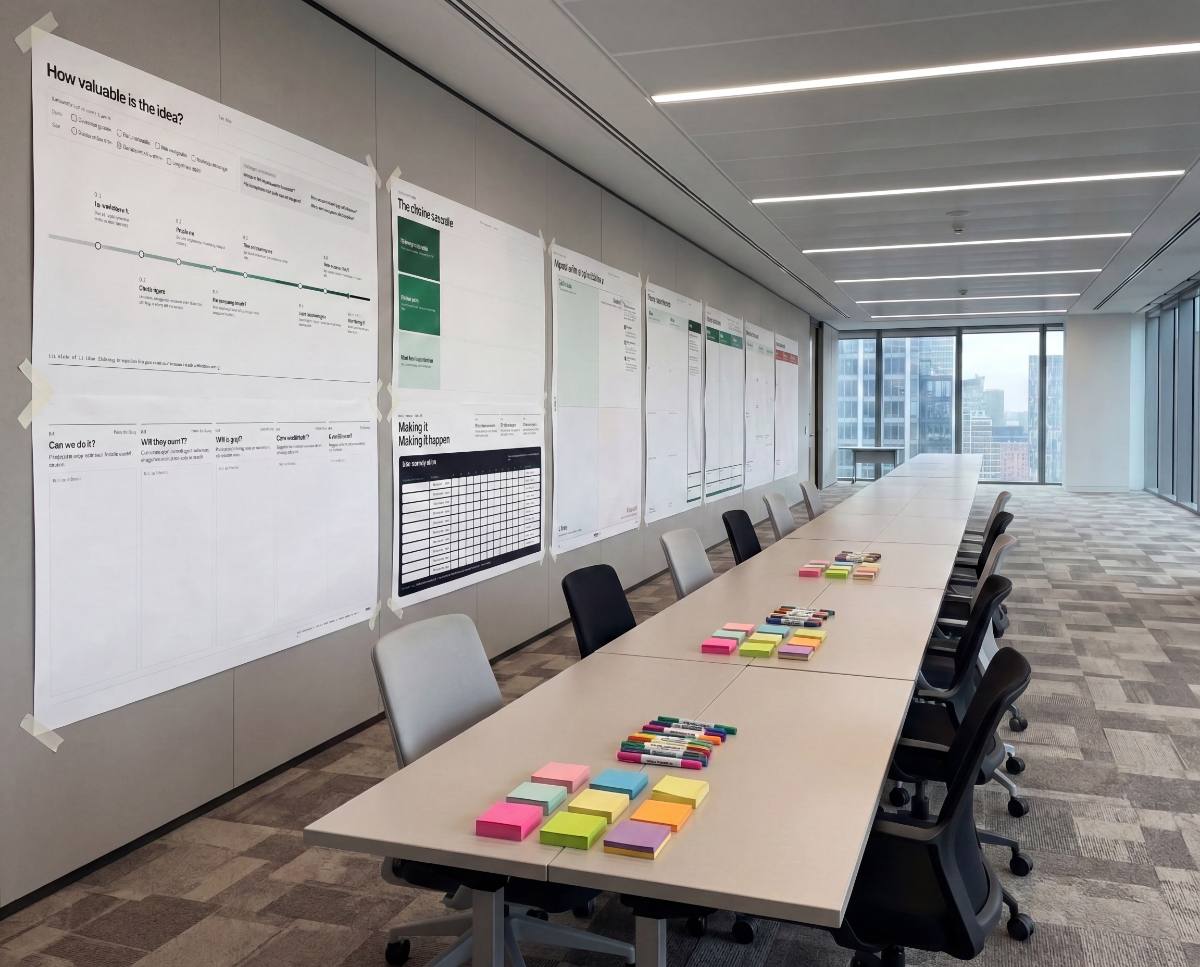
- However we run your planning, from a single in-person day to several weeks of interviews, async work, online sessions and workshops.
- The option is priced before we start, so nobody has to negotiate when energy is low.
- Most teams know by day 30 whether they want it.
Questions people ask first
Do you work as a scenario planning consultant?
Yes. We prepare the research and draft scenarios like a scenario planning consultant, then facilitate your leadership team to test the plan against them, so the result is yours, not ours.
What does a scenario planning facilitator do?
A scenario planning facilitator helps a leadership team build a few plausible futures, test its plan against each, and agree the early signs that would tell it to revisit the plan.
Nobody can predict the future.
That's the point. You're testing the plan against several futures, not predicting one.
Our finance director already runs sensitivities.
A spreadsheet shows what the numbers do. This session agrees what the leadership team will do, which the spreadsheet can't.
What does it cost?
A fixed fee, agreed after a 30-minute call once we know the size of the group, how long you have and what has to be decided by the end.
Is it confidential?
Yes. Interviews are confidential, themes are shared without names, and we sign an NDA before seeing any data.
Related
Last updated
Test your plan against more than one future.
Thirty minutes with Matt. Tell us what has to be decided, and afterwards we'll send you a short summary of the call: what we heard, and how we'd approach it.