OKR consulting that transforms how you operate.
We reduce the time it takes to set much better OKRs, help you progress and complete cycles faster, and make sure the learning is captured and compounds into the next one.
More goals achieved each year. More value from every one. Each new goal starts smarter than the last.
This is the engine room of how we work: the goals, the metrics, the rhythm and the learning loop that make a strategy actually happen.
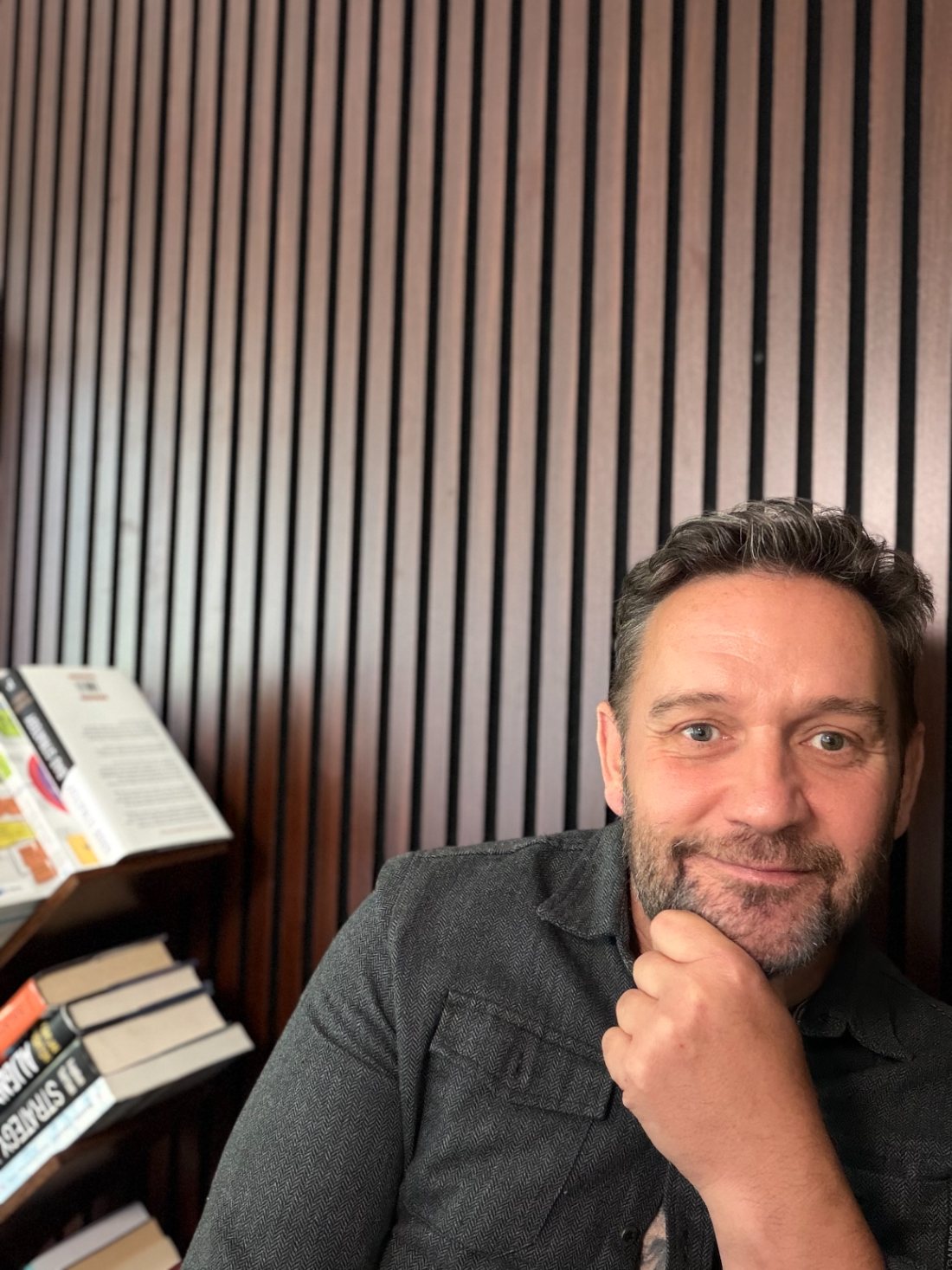
I exited a VC-backed SaaS business 8 years after founding it, then spent the past ten years studying how other companies had operated and scaled. I tested and compared every goal-setting framework there is and, along the way, helped hundreds of teams develop a lighter, more adaptive, and better version of OKRs. A version with all the wrinkles and gotchas removed.
Most OKR advice comes from people who've facilitated a workshop. Ours comes from people who've run the P&L it was meant to move. OKRs don't create value by existing. They create value when the person setting one, working on it, missing it, or finishing it early feels that the whole exercise was worth their time. Every step of the cycle, the setting, the pursuing, the reviewing, the learning, has to be rewarding, or the system dies quietly and everyone pretends otherwise for another two quarters.
So this isn't an invitation to adopt a framework. It's an invitation to improve how you operate: to build the version of goal-setting where experimenting and learning are as rewarding as hitting the number, where advantage compounds because people want to do this again next quarter, not because they're told to.
That's the standard we hold ourselves to. If your OKRs don't feel like that yet, we should talk.
Struggled with OKRs before? It was probably one of these.
Ten things we look at closely on every engagement, because this is where the difference between OKRs as admin and OKRs as a performance catalyst is usually made.
OKRs that match the org chart are a symptom that traces back to an ambiguous clarity of purpose.
It's common to see Company OKRs we could logo swap onto a competitor, and they'd remain the same.
A sentence and 2-3 bullets with measures isn't how OKRs started, and it shouldn't be how yours are written.
Outcomes beat outputs as a measure of success, but teams are often reluctant to use the right metrics with targets.
Most teams evaluate ideas sub-optimally, with biases shaping the decision, and leaders are often the worst offenders.
OKRs can stop early, start early, or thread over quarters as value streams. Most teams do none of this.
What defines success at quarter-end shapes how teams set OKRs at the start. There are many nuances here.
The best OKRs need people from multiple teams. "We have silos" is usually the symptom of this being sub-optimal.
How progress is tracked, reported and recognised shapes how OKRs get used. It needs to be optimised.
Much of what we do is based on untested beliefs. Training and coaching stop projects finishing without value realised.
What we leave companies with
OKRs used exceptionally well
Not the basic version you read about. The version that fits the org you actually are: the stage, the market, the runway, the ambition, the behaviours people need to show, and all the other nuances that make a huge difference to how you use them.
The operating rhythm
An optimised cadence: weekly and quarterly business reviews, OKRs, goal-tracking and cross-functional alignment across every geography.
The KPI and metrics models
We build a living metrics layer that sits alongside OKRs, with dashboards and metrics packs that are easy to reach, plus the structured artefacts like reports that leaders actually read.
OKRs part of your company brain
OKRs and execution knowledge flows so the right people know the right things at the right time, across every team and time zone.
SLT/founder leverage
We shape the priorities of the CEO, the SLT and the founders, filter what reaches them, and drive what leaves their desk through to completion. We make you measurably more effective.
Communication infrastructure
We help define how decisions get made, documented, communicated and followed through at scale, internally and externally.
Patterns into systems
Wherever the company repeats itself, we find the pattern, build the process or the agent that runs it, and get out of the way.
Connective tissue
We make it easy to spot misalignment between teams and geographies before it becomes a problem.
World-class knowledge meets experience
People skills that make learning and change easier
Assets we've perfected you'll want
What typical engagements include
Discovery
We map the real system before prescribing anything. Diagnostics first, so we fix the crux, not the symptom everyone is busy fighting.
Team skills training
We build capability into the team, not dependency on us. The operating skills get installed so the system keeps running after we have gone.
Workshop facilitation
The right people in a room, producing decisions, alignment and momentum, not just discussion.
Regular coaching
An ongoing cadence with founders and leaders: the loops and accountability that keep it moving between sessions.
How an implementation runs.
Assess
We map where effort is scattered and where your real leverage sits. Fast, and honest.
Design
Fewer, clearer goals in the right order, cascaded so every team knows their part.
Embed
A weekly and quarterly rhythm, wired into your AI Business OS so the system runs itself.
Coach
We build OKR champions inside your teams, so the capability stays long after we leave.
Whatever you need to call us.
OKR consultants, advisors, experts, coaches, trainers. Different words for different moments, one team of eight behind all of them, led by co-founder and OKR consultant Matt Roberts. Here is what each means, and when you would want it.
OKR Consultants
We design and implement your OKRs end to end, from strategy through to a working operating rhythm. The full build, done with you.
OKR Advisors & Experts
On-call expertise for your leaders. We pressure-test objectives, settle the debates and keep you honest between cycles.
OKR Coaches
We coach leaders and teams through real OKR cycles, building the judgement to run them brilliantly without us.
OKR Trainers
World-class OKR training that turns your people into OKR champions, who can then teach the next team.
faster progress on the goals that matter, usually within a quarter or two.
typical return on investment, achieved within twelve months.
capability that stays with your team, not locked in a consultant's head.
Three objectives, nine key results, cut to one and three in a single quarter.
Read the case study →Ashley Heather: strategy sharpened, OKRs adopted, growth that meant moving offices.
Read the case study →Won a market-wide RFP, rebooted OKRs, rated the process 4.6 out of 5.
Read the case study →A UK PLC's government-facing division converged on one operating rhythm.
Read the case study →
Matt Roberts, co-founder & lead consultant.
A two-time SaaS founder with a venture-backed exit, Matt turns strategy into execution for teams scaling from tens to thousands. He leads a team of eight senior consultants.
Want us to look at the goals you set today?
Start with a 45-minute review, not a project. If your OKRs are already working, we will happily tell you so.
Meet UsDo your teams run their part of the business well, and in the same way?
Two ways in. The same six things at the end.
We install the six and spend a year making them normal, not just adopted.
Scale Ready →We build one system out of the best of what you already have.
Converge →What changes while we're working with you
And a lot of them come from people and teams you weren't expecting.
They get looked at properly and answered, so the next lot arrives too. Nobody's idea disappears into a drive.
Real decisions about what becomes a goal, and where the money and the people go.
Then each goal gets built for what it actually is. If the point is to find something out, it's set up to find something out, rather than to deliver a number somebody guessed at in a planning meeting.
The things that annoyed people and slowed you down are gone.
The things that speed you up have been added instead.
It stops being the goal-setting thing and becomes how the company works.
Which is also the point at which it stops needing us.
More ideas, better choices, quicker learning, and a lot more people who can see where they contributed.
That last one does more for how the place feels than everything else on the list put together.
Everything you were about to ask.
What are OKRs? +
OKRs, or Objectives and Key Results, are a way of choosing what matters and knowing whether you're making progress. An Objective is a clear, qualitative goal. Key Results are the measurable outcomes that prove you reached it. Real OKRs are a reasoning system, not a scoreboard.
What is the difference between an OKR consultant, advisor, coach and trainer? +
An OKR consultant designs and implements your OKRs. An OKR advisor or expert gives on-call guidance and pressure-tests your thinking between cycles. An OKR coach builds your leaders' and teams' judgement through real cycles. An OKR trainer teaches the skills and creates OKR champions. ZOKRI does all four.
Do you offer OKR coaching and training? +
Yes. We provide OKR coaching for leaders and teams, and OKR training that creates OKR champions inside your organisation, so the capability stays with you.
Why do most OKR rollouts fail? +
Most fail because OKRs are treated as a tracking tool bolted onto business as usual: too many, too vague, disconnected from real decisions and with no operating rhythm behind them. We fix the reasoning and the rhythm, not just the template.
OKRs or KPIs? +
They work together. KPIs are the metrics you monitor to keep the business healthy. OKRs are the focused, time-bound changes you're choosing to make. You need both, and you need to know which is which.
How long does an implementation take? +
You will have well-formed OKRs within the first cycle, usually a quarter. The operating rhythm and champion capability build over the following two to three cycles.