AI strategy workshop for leadership teams

An AI strategy workshop is a facilitated session where a leadership team decides where AI fits into its plan, its organisation and how it operates, and what that means for each team.

Spend the day deciding where AI changes your 2027 plan: what you'll do differently, what you'll stop doing, and who owns each decision.

For leadership teams, senior leaders, executives and boards who need AI decisions rather than another demo.

A meeting room glass wall covered in sticky notes, sorted under four headings: Ideas, Themes, Choices, Goals.
Ideas, themes, choices, goals

What the day covers

  • Where AI changes your market, and what your customers will expect from you in 2027.
  • Where it changes how you operate: the work agents and automation can take on, and what that means for each team.
  • What you'll stop doing, and what you'll fund instead. If the plan has no "we will not", it isn't a strategy yet.
  • Goals, owners and a 30-day follow-up, booked before anyone leaves.

We treat AI adoption as a strategy-execution problem rather than a procurement event. The day ends with decisions your board can see, not a list of tools to trial.

Common ways to work with us

Opens a multi-day retreat

Serious planning. Silly props.

Four hours with Collette Easton and Matt Roberts: two 2-hour sessions with lunch in the middle. Inflatable unicorns, sacks of gold and a car dealer's coat, in service of a plan your team believes in. You run the days after, or bring us back.
See how the session works

  • Gather insights and prepare to plan

    Discovery one-to-ones

    Private conversations with your attendees, your customers or the customers you want, so the day starts with what people think.

  • A full day

    A facilitated planning day

    We design it with you, run it and debrief with you, along with any follow-on activities.

  • Two days or more

    Formal multi-day planning

    Diagnosis, choices, goals and the operating rhythm that carries them, chaired from start to finish.

Why bring in a facilitator

What we do that is hard to do from inside your own team.

  • We do the prep

    One-to-ones, pre-work and the data, ready before anyone sits down.

  • Structure that works

    Frameworks proven in hundreds of sessions, fitted to what you need to decide.

  • The skills to run the room

    Timing, pace and the recovery moves when a conversation stalls.

  • Objective and neutral

    No budget to protect, so we can challenge anyone, including the CEO.

  • We spot the patterns

    The things people keep circling back to, which are hard to see from inside the team.

  • We read the room

    Who has gone quiet, who is holding back, and when to push or pause.

  • We coach in between

    Support for the people who own the next steps, so momentum carries.

  • We adapt on the day

    Because we do this a lot, we change the plan when the room needs it.

What you can count on

Whoever's in the room, every session we run meets the same standard.

  • Experienced facilitators

    More than 500 workshops facilitated, by people who have built, run and sold companies. Collette Easton is an Association for Coaching accredited executive coach.

  • Success agreed first

    Before we design anything, we agree with the sponsor what the session has to achieve, and build every part of it around that.

  • Speaking your language

    Matt Roberts has been a founder, CEO, Chief Strategy Officer and Chief Product Officer, and began his career in ad agencies. He has worked across every function, so he speaks your team's language and nothing slows down.

  • Every voice heard

    We talk to attendees beforehand, and chair the room so the most senior voice never sets the frame.

  • Nothing lost afterwards

    Decisions, owners and dates are captured as they happen, and the follow-ups are agreed before anyone leaves.

Skills your team builds by doing the planning

We don't teach theory. Your team learns these by planning its real year, with us alongside.

  • Estimating the value of an idea

    Put a rough value on each option before anyone argues for it, so the debate is about evidence, not volume.

  • Experiments with learning loops

    Turn uncertain bets into small tests, each with a date to review what you learned.

Why do we sometimes use props and humour?

Every silly thing in the room has a serious job. This is the research it rests on.

2 years

In 54 real team meetings, humour followed by laughter predicted how well teams performed, straight afterwards and again two years later.

Source: Lehmann-Willenbrock and Allen, 2014

85%

of 106 C-suite executives agreed their organisations were bad at diagnosing problems. Creative answers usually come from redefining the problem first.

Source: Wedell-Wedellsborg, Harvard Business Review, 2017

18%

of groups picked the best option when the key facts were spread across people, against 83% when everyone had the full picture. One-to-ones bring the hidden facts out.

Source: Stasser and Titus, 1985, reported in Schulz-Hardt et al.

Comedy

People who watched a comedy solved more puzzles through sudden insight than people shown a scary film or a lecture.

Source: Subramaniam, Kounios, Parrish and Jung-Beeman, 2009

Who'll be in your room

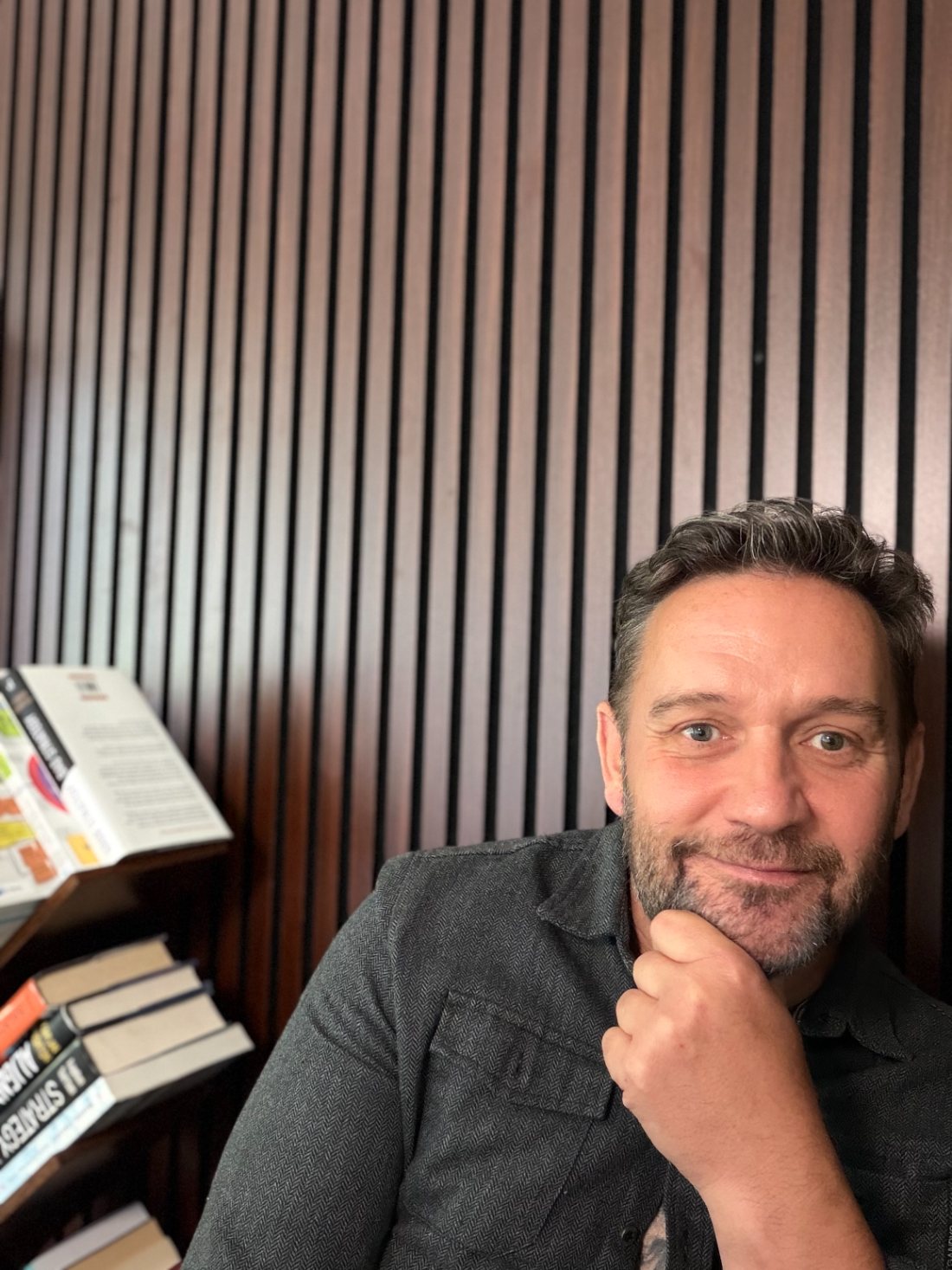
Matt Roberts

Matt Roberts

Strategy consultant, co-founder of ZOKRI

Matt on LinkedIn

  • Two-time SaaS founder. Co-founded Linkdex, backed by Amadeus Capital Partners and 500 Global, and led it to a trade sale.
  • Eight years building operating systems inside companies from tens to low thousands of people.
  • Has been a founder, CEO, Chief Strategy Officer and Chief Product Officer, and began his career in ad agencies, so he speaks the language of every function at the table.
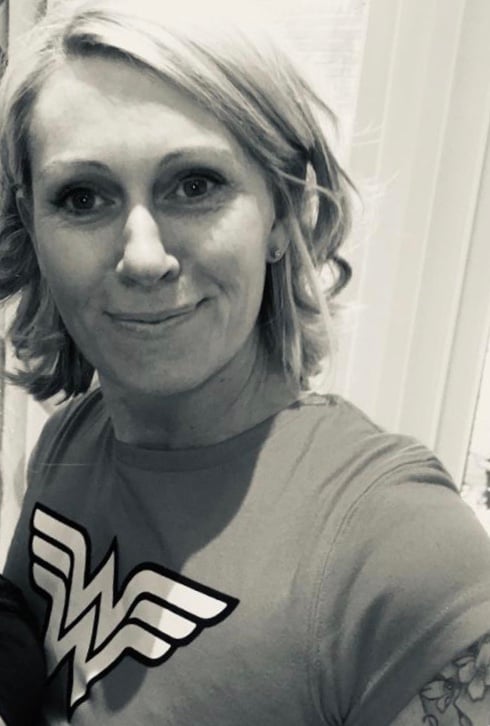
Collette Easton

Collette Easton

Executive coach

Collette on LinkedIn

  • Built and sold three companies over 20 years, most recently as CEO of Yard Digital.
  • Association for Coaching accredited, and an APMG-accredited Neuroscience for Change Management Practitioner.
  • Speaker at BrightonSEO 2026.
500+ workshops facilitated100+ organisations20+ years in strategy execution

The ZOKRI team has worked with Legal & General, Absa, SAP, Microsoft, Sage, Chargebee, Jaguar Land Rover, Rolls-Royce, News UK, ITV, ASOS and Virgin Atlantic.

Nicky Wake

"This is the most fun planning I have ever had. Every SLT needs to do this."

Nicky Wake, Don't Panic

Questions people ask first

Is this AI training for the leadership team?

It's a strategy workshop. People leave understanding what AI can do in your business, but the point of the day is the decisions: where to use it, what to fund and what to stop.

Who runs it?

Matt Roberts, a two-time SaaS founder with a venture-backed exit, who builds with AI agents and automation and treats AI adoption as a strategy-execution problem rather than a procurement event.

Should the leadership team or IT own the AI strategy?

The leadership team. AI changes what you sell, how you operate and who you hire, so it belongs in the business plan, not a technology roadmap. IT and data teams shape how it's done; the leadership team decides where and why.

Where should a company start with AI?

With the work, not the tools. Pick the two or three processes where time or quality matters most to customers, put a rough value on improving them, and run small experiments with a date to review what you learned.

Why do so many AI pilots go nowhere?

Because nobody agreed what success looked like or who would scale it. Give every pilot an owner, a measure and a stop date before it starts, then fund the winners properly and close the rest.

Will AI replace roles in our team?

It will change most roles before it replaces many. The useful question for a leadership team is which work AI can take on and what your people do with the time it frees. Deciding that openly builds more trust than leaving it to rumour.

What does it cost?

We quote after a 30-minute call, once we know the size of the group, how long you have and what you need decided by the end.

Where do you work?

Anywhere in the UK, including London, Manchester and Birmingham, plus Europe and the US. In person or online.

Where we work

We run planning days and away days across the UK, Europe and the US, in person or online. These are the cities we're asked about most.

AI strategy workshops in London, Manchester and Birmingham.

Tell us what has to be decided.

Thirty minutes with Matt Roberts. Tell us who'll be in the room and what you need by the end, and we'll tell you how we'd run it.