Meet leaders at the same growth stage: Managing Scaling at 20% +, Growth Catalysts, Finding Product Market-fit
Meet leaders of businesses your size and with similar challenges: - 50 - 100, 101 - 300, 301 - 500, 500+
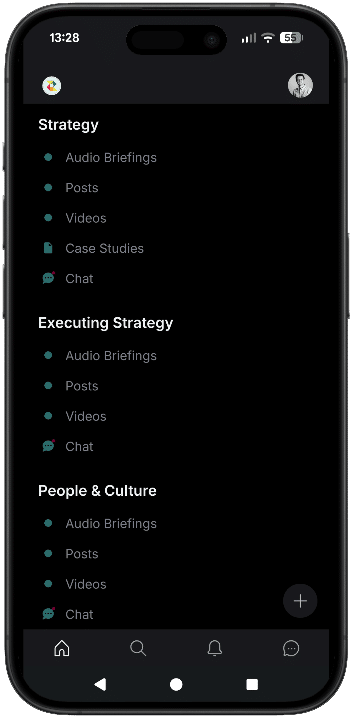
Deep-dive into expert briefings and masterclasses in strategy, goal-setting, execution and culture, without the noise of YouTube or the generic output of AI.
Every week we run Think Tanks on one topic that's current, front-of-mind - to be solved with experts and peers.
Learn from CEOs who've scaled, exited and led through complexity, plus researchers and authors at the cutting edge.
Share advice and build relationships before making making a relationship more formal in the future.
Bonus plans often conflate activity with outcome, reward individual behaviour that undermines collective strategy, and create a quiet tax on the culture you’re trying to build. They routinely punish the people closest to execution for decisions made three floors above them.
This think tank cracked the architecture question underneath the spreadsheet: how to make a bonus plan function as a genuine signal system. One that connects daily decisions to strategic bets, separates the work that deserves cash from the work that deserves recognition, protects intrinsic motivation where money would corrode it, and earns the trust of the people it’s meant to motivate. The result is an approach and framework any leadership team can implement, stress-test, and defend.
OKRs promise alignment and focus, but often become goal-setting theatre, rewarding activity over impact and creating the illusion of alignment while execution fragments underneath. Teams follow the format, hit the cadence, and still miss the point.
This think tank tackled the question beneath the framework: how to make OKRs function as a genuine strategic system. One that connects day-to-day work to real strategic choices, gives outcomes meaning through a clear metrics model, and aligns teams around value creation. The result is a practical approach leaders can apply, stress-test, and rely on to drive measurable growth.
Meetings are treated as coordination tools, but in reality, they operate as a company’s hidden system, shaping how decisions get made, how time is spent, and how work actually moves forward. Most organisations inherit their meeting culture rather than design it, and the result is predictable, fragmented focus, slow execution, and wasted capacity disguised as collaboration.
This think tank tackled the problem at its root. Not how to run slightly better meetings, but how to redesign meetings as a strategic lever, one that protects time, sharpens decision-making, and increases organisational output. By reframing meetings as an operating system rather than a calendar habit, it introduces a practical model leaders can implement, test, and scale. The outcome is a clear, structured approach that gives time back to teams, improves performance, and turns meetings into a driver of growth rather than a drain on it.
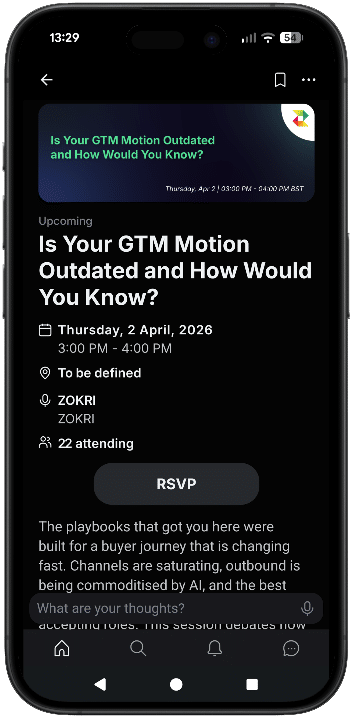
Apr 2
3:00 – 4:00 PM BST
The playbooks that got you here were built for a buyer journey that is changing fast. Channels are saturating, outbound is being commoditised by AI, and the best GTM talent now screens companies before accepting roles. This session debates how to honestly audit whether your go-to-market is still working and what it actually takes to change it when your team’s identity is built around the old approach.
Apr 9
3:00 – 4:00 PM BST
Hiring pauses do not have to mean capability pauses, but for most companies that is exactly what happens. This session debates what deliberate internal development actually looks like when there is no budget, no clear promotion path, and a team that is already stretched. The hard question: how do you develop someone without implicitly promising them something you cannot deliver?
Apr 16
3:00 – 4:00 PM BST
You have been at this company for years. You know where the bodies are buried, you have history with almost everyone in the building, and some of your direct reports were until recently your friends, your lunch companions, or the people you vented to about the previous boss. Now you are the boss. This session debates one of the most personally uncomfortable transitions in leadership: how to build the professional distance the role requires without becoming a different person, losing the relationships that made you effective, or overcorrecting into the kind of formal, guarded behaviour that makes everyone around you uneasy. There is no clean answer and no framework that makes it comfortable. But there are CEOs in this room who have navigated it, and that is worth more than any theory.
Apr 23
3:00 – 4:00 PM BST
The research signal has been consistent for months: AI tools are intensifying workloads, not reducing them. Teams are producing more output but not getting hours back. This session debates what genuine AI-enabled productivity looks like versus adoption for its own sake, and what a CEO should do when the evidence suggests their AI spend is creating work rather than eliminating it.
Apr 30
3:00 – 4:00 PM BST
Most CEOs believe they are trustworthy because they are consistent. But consistency and transparency are different currencies. This session debates the specific ways new CEOs quietly erode trust, through information they do not share, feedback loops that break down, and signals they do not see until it is already a problem. The uncomfortable question: how do you know whether your team is being fully honest with you right now?
May 7
3:00 – 4:00 PM BST
Most new CEOs treat the board as an audience to impress or an obstacle to manage. The ones who last longest treat it as a resource and know how to use it as one. This session debates what genuinely good board management looks like versus what most CEOs actually do, and focuses on the one thing that separates the two: the willingness to share difficult information before you are forced to.
May 14
3:00 – 4:00 PM BST
The evidence is consistent: most new CEOs have their time ratio inverted, spending the majority of time in the business rather than on it. This session uses real, anonymised calendar data as the starting point for an honest conversation about strategic time allocation, what it actually takes to shift the ratio, and what strategic work is not getting done because you are still in the operational stream.
May 21
3:00 – 4:00 PM BST
Research shows 27% of CEOs struggle with significant loneliness and isolation, but the real issue is more specific than that. It is the absence of a single person you can be fully honest with about the business. You cannot be fully candid with your board, your team, your investors, or often your partner. This session is a frank conversation about what a real support infrastructure looks like, why most CEOs do not have one, and what it costs them in decision quality.
May 28
3:00 – 4:00 PM BST
Pre-meetings before the real meeting. Decks nobody reads fully. Status updates that serve anxiety rather than alignment. Most organisations are running a hidden second job, the management of being seen to manage. This session debates how much coordination overhead is genuinely necessary versus structural waste, and what it takes to recover that capacity without destroying the sense of inclusion people depend on.
Jun 4
3:00 – 4:00 PM BST
A 5% improvement in price realisation typically produces more bottom-line impact than a 20% reduction in costs. Most SMB CEOs are significantly undercharging, not because they do not know it, but because fixing it means having difficult conversations with the customers who got them here. This session debates the psychology behind pricing decisions, what is actually at risk when you raise prices versus what you believe is at risk, and what it takes to make one change in the next 90 days.
Hours of Audio to Develop your Skills · Under 30 min Each
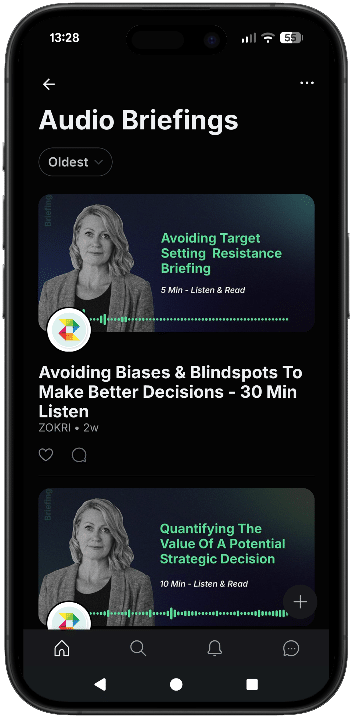
Avoiding Target Setting Resistance
Outcome-driven measurement — designed for the realities of how targets are experienced inside organizations.
Built to move teams from activity to outcomes, without turning targets into weapons.
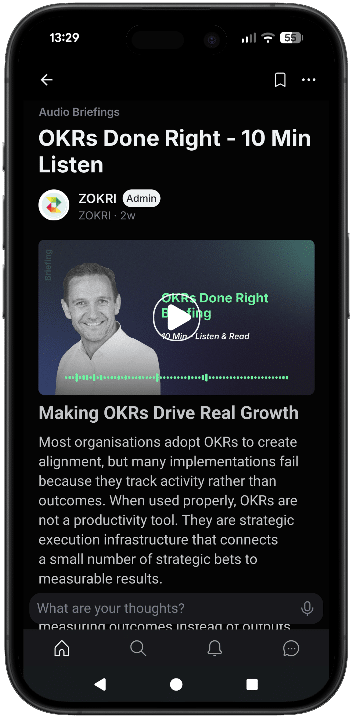
OKRs Done Right: The Execution Infrastructure For Your Strategy
ZOKRI's OKR implementation methodology — built over a decade of hands-on work, refined across hundreds of implementations.
Designed not from theory, but from practice.
Building an Experimentation Mindset for Strategic Progress
How fast-growing companies run smaller, faster tests that accelerate learning and reduce the cost of being wrong — redirecting energy from defending assumptions to testing them.
Over 40 hours of CEOs sharing their playbooks and head earned knowledge and Author/Researches providing new perspectives.
Garry Ridge
Chairman Emeritus – WD-40 Company
Collette is joined by Garry Ridge — culture coach, author of Any Dumb Ass Can Do It, and former CEO of WD-40. Over 25 years, he grew the company to 176 countries, 6× revenue, and over $3B market cap while achieving 93% employee engagement.
Garry explains why culture multiplies strategy, sharing his formula: success = will of the people × strategy. He outlines four leadership foundations — belonging, making people feel they matter, psychological safety, and coaching instead of managing.
They also discuss servant leadership, treating mistakes as “learning moments,” removing high-performing jerks who damage culture, and how leaders can build real connection in a hybrid world. Garry also shares why AI should free humans to focus on connection, creativity, and learning.
If you’re a CEO of a company that got 50 or more employees and is either looking for faster growth or is managing high growth, we would love to have you join our community.
You might even want to share your wisdom as part of our CEO podcast interview series and take part in CEO think tanks that solve common challenges.
© ZOKRI 2026 All rights reserved | Privacy Policy | Terms & Conditions | GDPR
Glen has scaled and exited several companies. He helps customers develop their strategies, use OKRs, and execute their plans.
His deep understanding of sales processes and AI enablement makes him a great fit for customers with challenges in those areas.