Someone inside, owning execution.
When everything routes through you, and the plan keeps stalling, you don't need more strategy. You need a senior operator owning execution from the inside. Fractionally or interim, we’re ready to get things moving.
A senior right hand who joins your team part-time, sequences the work, runs the rhythm, and pushes the big bets over the line. All of the impact, none of the full-time overhead.
The work that keeps slipping off your desk.
Operators who have lived the decisions you're facing.
A team of eight senior consultants, led by co-founder Matt Roberts, who have founded, scaled and sold companies, held Chief Product Officer and Strategy roles, and led transformations from scale-up to enterprise. We embed as people who have made these calls, not consultants narrating them from the outside.
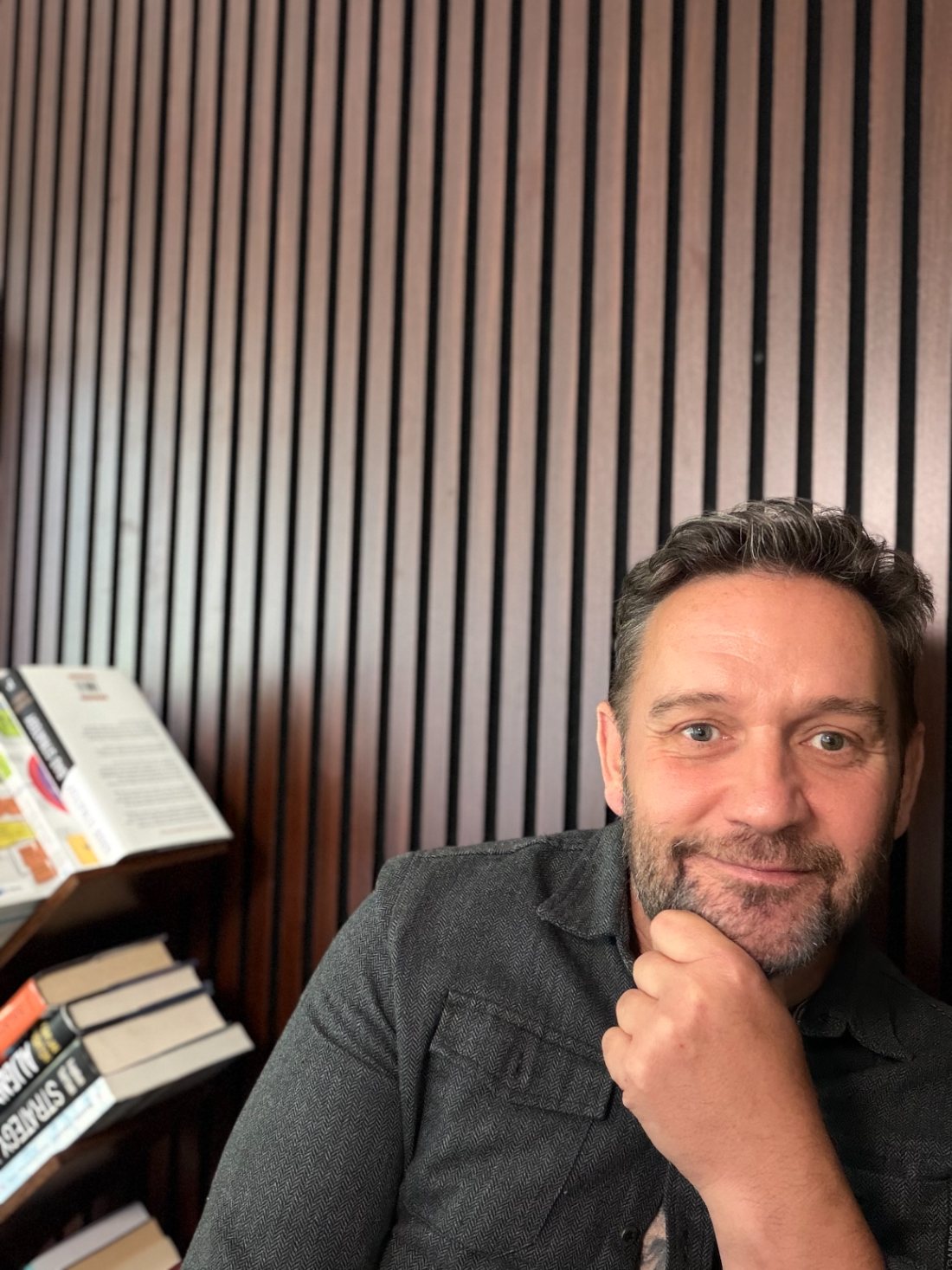
“I turn strategy into execution: the priorities, cadence, structure and culture that move the numbers that matter.” Matt sits in the engine room with you, turning decisions into motion week to week.
He wasn't what we expected. Less formal, and much more interested in our business and people. He helped us sharpen our strategy and adopt OKRs, and both are definitely behind our much higher growth rate.
Is this right for us?
What is a Fractional Chief of Staff? +
A senior operator who embeds inside your business part-time to own execution: sequencing priorities, running the operating rhythm and driving the big bets forward, without the cost of a full-time hire.
When do I need one? +
When everything routes through you, the plan keeps stalling, and you're firefighting instead of leading. You don't need more strategy, you need someone owning execution inside the business.
How is this different from a consultant? +
A consultant narrates from the outside and leaves a deck. A Fractional Chief of Staff embeds as one of your team, makes decisions with you, and is measured on progress, not slides.
How much time do they commit? +
It's flexible and scoped to what you need, from a couple of days a week to more intensive periods around key moments. Short term or long term, you get senior capability without the full-time overhead.
A whole operating system in the room, if you want it.
Your Chief of Staff brings our OKR Knowledge System as a worked example and our AI Business OS as an accelerant. Use as much or as little as you like. We meet you where you are, in your tools and your way of working, and never force our method or our software on you.
Get execution off your desk.
Start with a short look at where execution is stalling. A couple of weeks, small fixed fee. If a Chief of Staff isn't the answer, we will tell you what is.
Meet UsWhat changes while we're working with you
And a lot of them come from people and teams you weren't expecting.
They get looked at properly and answered, so the next lot arrives too. Nobody's idea disappears into a drive.
Real decisions about what becomes a goal, and where the money and the people go.
Then each goal gets built for what it actually is. If the point is to find something out, it's set up to find something out, rather than to deliver a number somebody guessed at in a planning meeting.
The things that annoyed people and slowed you down are gone.
The things that speed you up have been added instead.
It stops being the goal-setting thing and becomes how the company works.
Which is also the point at which it stops needing us.
More ideas, better choices, quicker learning, and a lot more people who can see where they contributed.
That last one does more for how the place feels than everything else on the list put together.
Three reasons this can't be you
Getting help here isn't weakness. It's arithmetic.
Everything in there looks normal, because it's just how things get done here.
You can't diagnose a system you're standing inside.
None of you can chair that conversation cleanly.
Which few things to actually do is a decision you and your SLT all have skin in. We have watched bias dilute the right answer more times than we can count.
There's no professional body for this one.
Lawyers have a body that trains them and holds them to a standard. Anyone designing how a company plans, measures, judges and rewards has a management qualification that skipped it, a book or two, and what they saw work somewhere else.
Patterns, gotchas, slides, templates, agenda and hours, mostly. Duller than it sounds.
You have a day job that fills all of yours. This is ours, and it's what our success gets measured on. We've seen what works and what doesn't at scale, so we can match it to your context rather than hand you the average, and we know which versions hold when a quarter goes badly.
The diagnostics, the learning assets and the people to run a programme already exist, with a human in the loop at every point that matters.
These are what's missing almost everywhere. Each one is a piece of work with a name, in the order it tends to happen.
Then step seven loops back to the design, which is what stops it being a project with an end date.
Already running OKRs? Get an objective read on the implementation: the OKR Implementation Review, free, 45 minutes.