Real OKRs. Not a scoreboard.
We reduce the time it takes to set much better OKRs, help you progress and complete cycles faster, and make sure the learning is captured and compounds into the next one.
More goals achieved each year. More value from every one. Each new goal starts smarter than the last.
This is the engine room of how we work: the goals, the metrics, the rhythm and the learning loop that make a strategy actually happen.
Value Sequencing: goals at the speed of the work
The quarterly rhythm has real advantages, a shared clock, synchronised reviewing, alignment across teams, and we keep all of it. What we change is what happens inside the quarter. Goals sized to be finished get finished, sometimes in five weeks, and when they are, you don't rest until the calendar catches up. The next most valuable goal in the value stream gets pulled immediately. No goals padded to fill 90 days, no stale goals dragged to quarter-end, no idle time between goals. And no goal force-closed by a date when the work genuinely needed longer.
The setting gets cheaper too. Planning is overhead inside the strategic budget, hours spent on aiming rather than moving, so we get you to much better OKRs in days rather than weeks and hand those hours back to the work.
And ending early cuts both ways: an OKR with little progress, stopped for reasons you can articulate and keep, is a decision, not a failure. It frees the hours for the next goal, and the reasoning stays so nobody repeats the attempt blind. We make you fast, and fast doesn't wait for the calendar. The quarter stays. The waiting goes.
And the strategy updates too.
A strategy is a set of beliefs about what will work. Execution is how you find out.
Most companies run that experiment and never read the result. The strategy is set once, the goals get delivered against it, and the evidence the work produced about whether the strategy was right goes nowhere.
So we build the return path. Each strategic choice carries the belief underneath it and the thing that would show it was wrong, written down in advance. Confidence gets reviewed monthly against the metric model. And there is a proper route for changing a bet that has been disproved, so evidence neither dies in a team meeting nor turns every finding into a crisis.
Changing a bet early, on good evidence, is a strategy well run. It's not an admission of failure, and if it feels like one in your business, that is worth knowing too.
Quietly, underneath.
AI runs through this quietly. It carries the compiling, the drafting and the retrieval, so the reporting stops being a tax on the people doing the work. And because your reports come from the same record as your weekly check-ins, you can't end up with a real version and an official version.
The test we apply to every bit of it: did this move time from the mechanical to the human, or did it just make the machine work louder?
Struggled with OKRs before? It was probably the setup, not you.
How an implementation runs.
Assess
We map where effort is scattered and where your real leverage sits. Fast, and honest.
Design
Fewer, clearer goals in the right order, cascaded so every team knows their part.
Embed
A weekly and quarterly rhythm, wired into your AI Business OS so the system runs itself.
Coach
We build OKR champions inside your teams, so the capability stays long after we leave.
Whatever you need to call us.
OKR consultants, advisors, experts, coaches, trainers. Different words for different moments, one team of eight behind all of them, led by co-founder and OKR consultant Matt Roberts. Here is what each means, and when you would want it.
OKR Consultants
We design and implement your OKRs end to end, from strategy through to a working operating rhythm. The full build, done with you.
OKR Advisors & Experts
On-call expertise for your leaders. We pressure-test objectives, settle the debates and keep you honest between cycles.
OKR Coaches
We coach leaders and teams through real OKR cycles, building the judgement to run them brilliantly without us.
OKR Trainers
World-class OKR training that turns your people into OKR champions, who can then teach the next team.
faster progress on the goals that matter, usually within a quarter or two.
typical return on investment, achieved within twelve months.
capability that stays with your team, not locked in a consultant's head.
Everything you were about to ask.
What are OKRs? +
OKRs, or Objectives and Key Results, are a way of choosing what matters and knowing whether you're making progress. An Objective is a clear, qualitative goal. Key Results are the measurable outcomes that prove you reached it. Real OKRs are a reasoning system, not a scoreboard.
What is the difference between an OKR consultant, advisor, coach and trainer? +
An OKR consultant designs and implements your OKRs. An OKR advisor or expert gives on-call guidance and pressure-tests your thinking between cycles. An OKR coach builds your leaders' and teams' judgement through real cycles. An OKR trainer teaches the skills and creates OKR champions. ZOKRI does all four.
Do you offer OKR coaching and training? +
Yes. We provide OKR coaching for leaders and teams, and OKR training that creates OKR champions inside your organisation, so the capability stays with you.
Why do most OKR rollouts fail? +
Most fail because OKRs are treated as a tracking tool bolted onto business as usual: too many, too vague, disconnected from real decisions and with no operating rhythm behind them. We fix the reasoning and the rhythm, not just the template.
OKRs or KPIs? +
They work together. KPIs are the metrics you monitor to keep the business healthy. OKRs are the focused, time-bound changes you're choosing to make. You need both, and you need to know which is which.
How long does an implementation take? +
You will have well-formed OKRs within the first cycle, usually a quarter. The operating rhythm and champion capability build over the following two to three cycles.
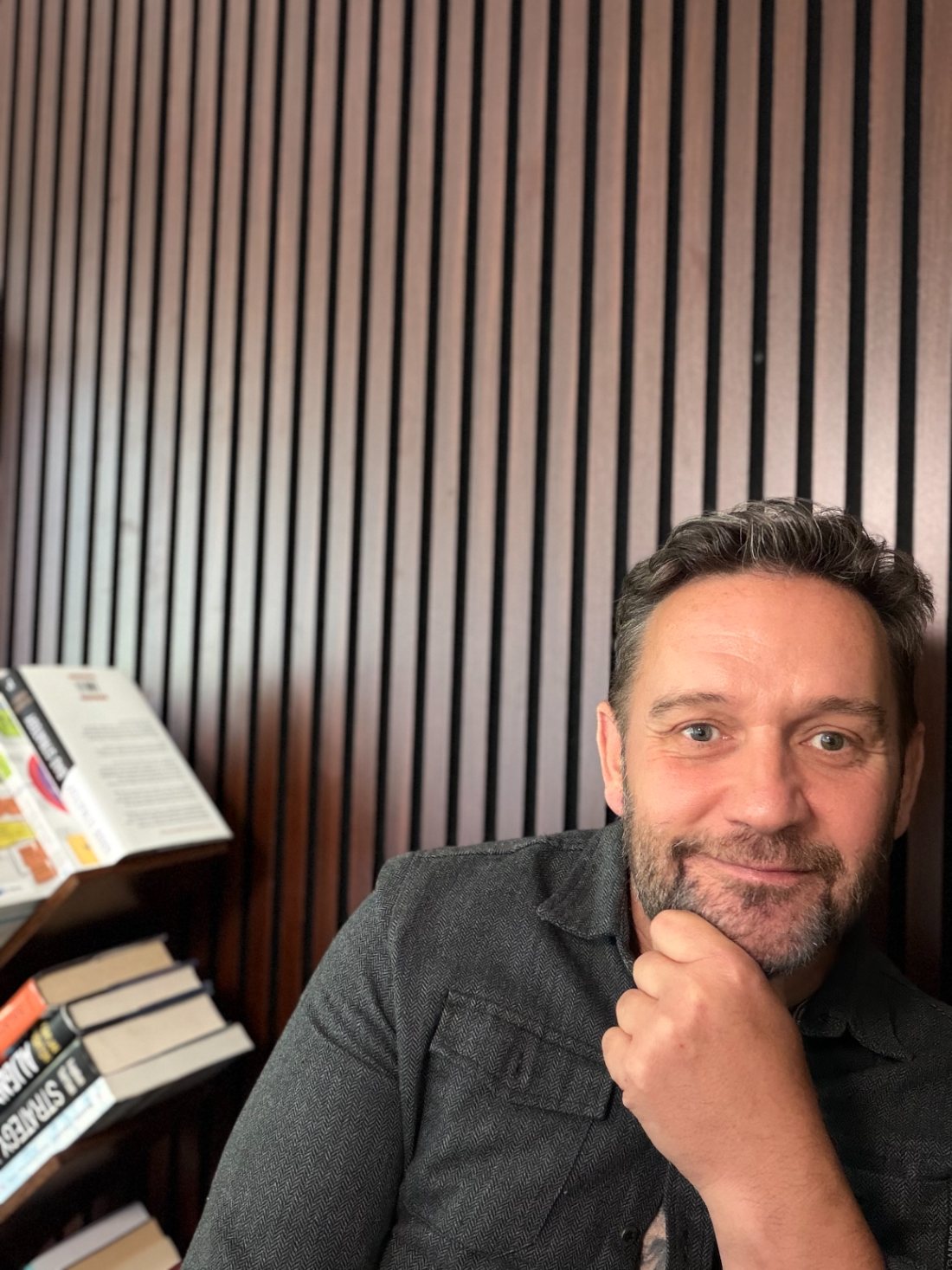
Matt Roberts, co-founder & lead consultant.
A two-time SaaS founder with a venture-backed exit, Matt turns strategy into execution for teams scaling from tens to thousands. He leads a team of eight senior consultants, so you get the right operator for your moment.
Grounded in a maintained system, not slideware.
Our consulting is built on the OKR Knowledge System, 141 linked notes we genuinely maintain, and it can live on in your LLM and your Business OS so it keeps running after we leave. Use as much or as little as fits. We meet you where you are, in your tools and your way of working.
From three company objectives and nine key results to one and three, in a single quarter.
A fast-scaling Series C insuretech was losing delivery pace as it grew. We refocused its OKRs and fixed the metric foundation underneath, with outcomes in the client’s own figures.
Read the case study →Let us pressure-test your goals.
Start with a look, not a project. A couple of weeks, small fixed fee. If your OKRs are already working, we will happily tell you so.
Meet UsDo your teams run their part of the business well, and in the same way?
Two ways in. The same six things at the end.
We install the six and spend a year making them normal, not just adopted.
Scale Ready →We build one system out of the best of what you already have.
Converge →What changes while we're working with you
And a lot of them come from people and teams you weren't expecting.
They get looked at properly and answered, so the next lot arrives too. Nobody's idea disappears into a drive.
Real decisions about what becomes a goal, and where the money and the people go.
Then each goal gets built for what it actually is. If the point is to find something out, it's set up to find something out, rather than to deliver a number somebody guessed at in a planning meeting.
The things that annoyed people and slowed you down are gone.
The things that speed you up have been added instead.
It stops being the goal-setting thing and becomes how the company works.
Which is also the point at which it stops needing us.
More ideas, better choices, quicker learning, and a lot more people who can see where they contributed.
That last one does more for how the place feels than everything else on the list put together.
Three reasons this can't be you
Getting help here isn't weakness. It's arithmetic.
Everything in there looks normal, because it's just how things get done here.
You can't diagnose a system you're standing inside.
None of you can chair that conversation cleanly.
Which few things to actually do is a decision you and your SLT all have skin in. We have watched bias dilute the right answer more times than we can count.
There's no professional body for this one.
Lawyers have a body that trains them and holds them to a standard. Anyone designing how a company plans, measures, judges and rewards has a management qualification that skipped it, a book or two, and what they saw work somewhere else.
Patterns, gotchas, slides, templates, agenda and hours, mostly. Duller than it sounds.
You have a day job that fills all of yours. This is ours, and it's what our success gets measured on. We've seen what works and what doesn't at scale, so we can match it to your context rather than hand you the average, and we know which versions hold when a quarter goes badly.
The diagnostics, the learning assets and the people to run a programme already exist, with a human in the loop at every point that matters.
These are what's missing almost everywhere. Each one is a piece of work with a name, in the order it tends to happen.
Then step seven loops back to the design, which is what stops it being a project with an end date.
Already running OKRs? Get an objective read on the implementation: the OKR Implementation Review, free, 45 minutes.